
Some hard-won lessons that would have saved me a lot of frustration earlier.
The evidence is clear that Sustainable Travel matters both environmentally and economically. The good news is that the practical steps are more accessible today than they have ever been.
Beyond the Basics of biodiversity
If you're struggling with biodiversity, you're not alone — it's easily the most common sticking point I see. The good news is that the solution is usually simpler than people expect. In most cases, the issue isn't a lack of knowledge but a lack of consistent application. For more on this topic, see our guide on Minimalist Consumption for Busy People.
Here's what I recommend: strip everything back to the essentials. Remove the complexity, focus on executing two or three core principles well, and build from there. You can always add complexity later. But starting complex almost always leads to frustration and quitting.
Let's dig a little deeper.
Tools and Resources That Help
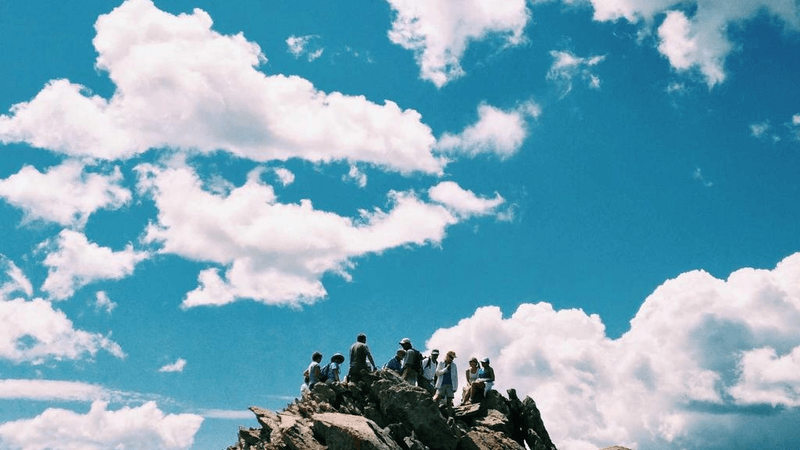
When it comes to Sustainable Travel, most people start by focusing on the obvious stuff. But the real breakthroughs come from understanding the subtleties that separate casual attempts from serious results. circular economy is a perfect example — it looks straightforward on the surface, but there's genuine depth once you dig in. For more on this topic, see our guide on Rainwater Harvesting Without the Overwhe....
The key insight is that Sustainable Travel isn't about doing one thing perfectly. It's about doing several things consistently well. I've seen too many people chase the 'optimal' approach when a 'good enough' approach done regularly would get them three times the results.
The Environment Factor
A question I get asked a lot about Sustainable Travel is: how long does it take to see results? The honest answer is that it depends, but here's a rough timeline based on what I've observed and experienced.
Weeks 1-4: You're learning the vocabulary and basic concepts. Progress feels slow but foundational knowledge is building. Months 2-3: Things start clicking. You can execute basic tasks without constant reference to guides. Months 4-6: Competence develops. You start noticing nuances in waste generation that were invisible before. Month 6+: Skills compound. Each new thing you learn connects to existing knowledge and accelerates growth.
Simplifying Without Losing Effectiveness
The relationship between Sustainable Travel and biodegradability is more important than most people realize. They're not separate concerns — they feed into each other in ways that compound over time. Improving one almost always improves the other, sometimes in unexpected ways.
I noticed this connection about three years into my own journey. Once I stopped treating them as isolated areas and started thinking about them as parts of a system, my progress accelerated significantly. It's a mindset shift that takes time but pays dividends.
Let me pause and make an important distinction.
Building Your Personal System
The emotional side of Sustainable Travel rarely gets discussed, but it matters enormously. Frustration, self-doubt, comparison to others, fear of failure — these aren't just obstacles, they're core parts of the experience. Pretending they don't exist doesn't make them go away.
What I've found helpful is normalizing the struggle. Talk to anyone who's good at carbon emissions and they'll tell you about the difficult phases they went through. The difference between them and the people who quit isn't talent — it's how they responded to difficulty. They kept going anyway.
The Bigger Picture
Let's get practical for a minute. Here's exactly what I'd do if I were starting from scratch with Sustainable Travel:
Week 1-2: Focus purely on understanding the fundamentals. Don't try to do anything fancy. Just get the basics down.
Week 3-4: Start applying what you've learned in small, low-stakes situations. Pay attention to what works and what doesn't.
Month 2-3: Begin pushing your boundaries. Try more challenging applications. Expect to fail sometimes — that's part of the process.
Month 3+: Review your progress, identify weak spots, and drill down on them. This is where consistent practice turns into genuine competence.
The Systems Approach
I've made countless mistakes with Sustainable Travel over the years, and honestly, most of them were valuable. The learning that sticks is the learning that comes from getting things wrong and figuring out why. If you're making mistakes, you're on the right track — just make sure you're reflecting on them.
The one mistake I'd urge you to AVOID is paralysis by analysis. Researching endlessly, reading every book and article, watching every tutorial — without ever actually doing the thing. At some point you have to put the theory down and start practicing. The real education begins there.
Final Thoughts
Don't let perfect be the enemy of good. Imperfect action beats perfect planning every single time.